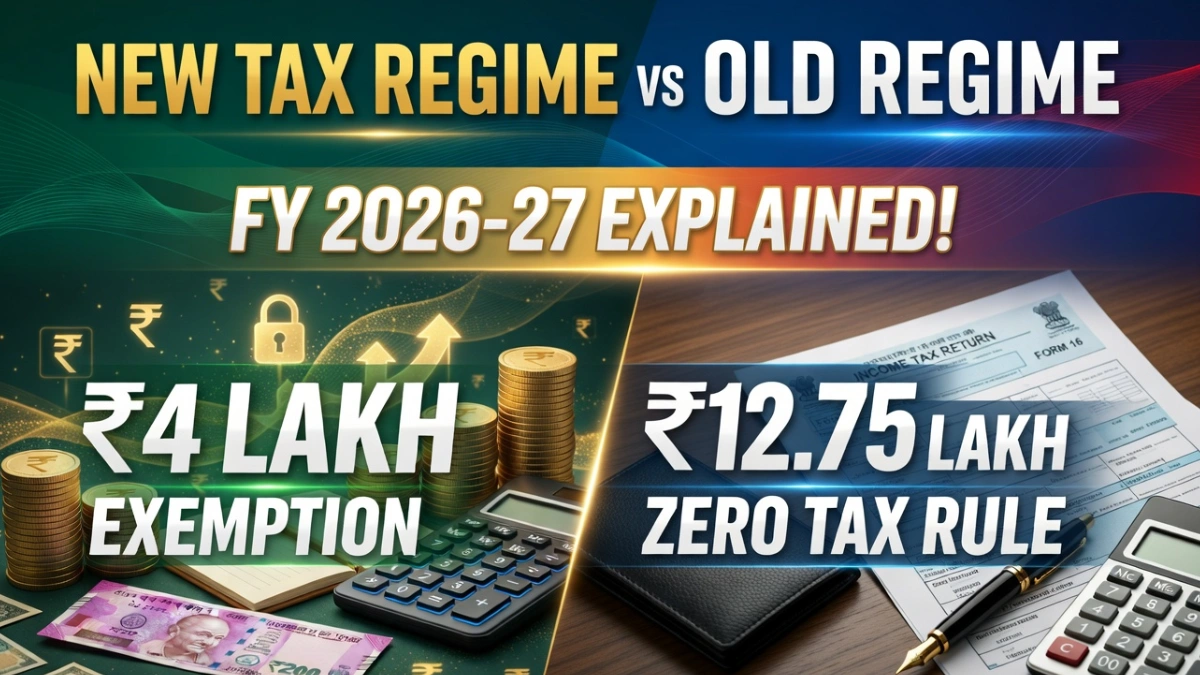
A complete comparison of the new and old tax regimes for FY 2026–27, highlighting updated exemption limits, zero tax thresholds, and how taxpayers can choose the best option
Overview of Tax Regimes in FY 2026–27
For the financial year 2026–27, taxpayers in India can choose between the new tax regime and the old tax regime based on their income structure and deductions. The government continues to promote the new regime with simplified tax slabs and lower rates, while the old regime remains beneficial for those who claim multiple deductions and exemptions.
Recent updates, including the ₹4 lakh exemption limit and ₹12.75 lakh zero tax benefit, have made the new tax regime more attractive for salaried individuals and middle-income groups.
New Tax Regime Key Highlights
The new tax regime offers reduced tax rates with minimal deductions, making it easier for taxpayers who prefer a straightforward filing process. The increased basic exemption limit of ₹4 lakh ensures that a larger portion of income remains tax-free. Additionally, with rebates and standard deductions considered, individuals earning up to ₹12.75 lakh may effectively pay zero tax, depending on their salary structure.
This regime is ideal for individuals who do not invest heavily in tax-saving instruments or prefer liquidity over long-term locked investments.
Old Tax Regime Key Features
The old tax regime continues to allow multiple deductions and exemptions, such as investments under Section 80C, health insurance under Section 80D, and house rent allowance benefits. While tax rates are comparatively higher, taxpayers who maximize deductions can significantly reduce their taxable income.
This regime is suitable for individuals with structured financial planning and those who actively invest in tax-saving schemes.
Comparison of New vs Old Tax Regime
| Feature | New Tax Regime 2026–27 | Old Tax Regime |
|---|---|---|
| Basic Exemption Limit | ₹4,00,000 | ₹2,50,000 |
| Zero Tax Threshold | Up to ₹12.75 lakh (with rebate) | Depends on deductions |
| Deductions | Limited | Multiple deductions allowed |
| Tax Filing | Simple and quick | More documentation required |
| Best For | Salaried with fewer deductions | Investors using tax-saving tools |
Who Should Choose Which Regime
Choosing between the two regimes depends on individual financial behavior. Taxpayers who prefer simplified filing and fewer compliance requirements may benefit from the new regime. On the other hand, those who invest in PPF, LIC, ELSS, and other tax-saving instruments may find the old regime more beneficial due to available deductions.
A careful comparison of total taxable income under both regimes is essential before making a decision.
Impact of ₹12.75 Lakh Zero Tax Rule
The ₹12.75 lakh zero tax rule significantly benefits middle-income earners by reducing their effective tax liability to zero through rebates and standard deductions. This change aims to boost disposable income and encourage spending, contributing to economic growth.
However, actual tax savings may vary depending on income components and applicable deductions, so taxpayers should evaluate their situation carefully.
Conclusion
The New Tax Regime FY 2026–27 offers higher exemption limits and simplified tax calculation, making it attractive for many taxpayers, especially with the ₹4 lakh exemption and ₹12.75 lakh zero tax benefit. Meanwhile, the old regime remains relevant for those who utilize deductions effectively. Choosing the right regime requires a detailed comparison based on income, investments, and financial goals.
Disclaimer: This article is for informational purposes only. Income tax rules, exemption limits, and rebate provisions are subject to change as per government notifications. Taxpayers should consult official income tax guidelines or certified tax professionals before making filing decisions.