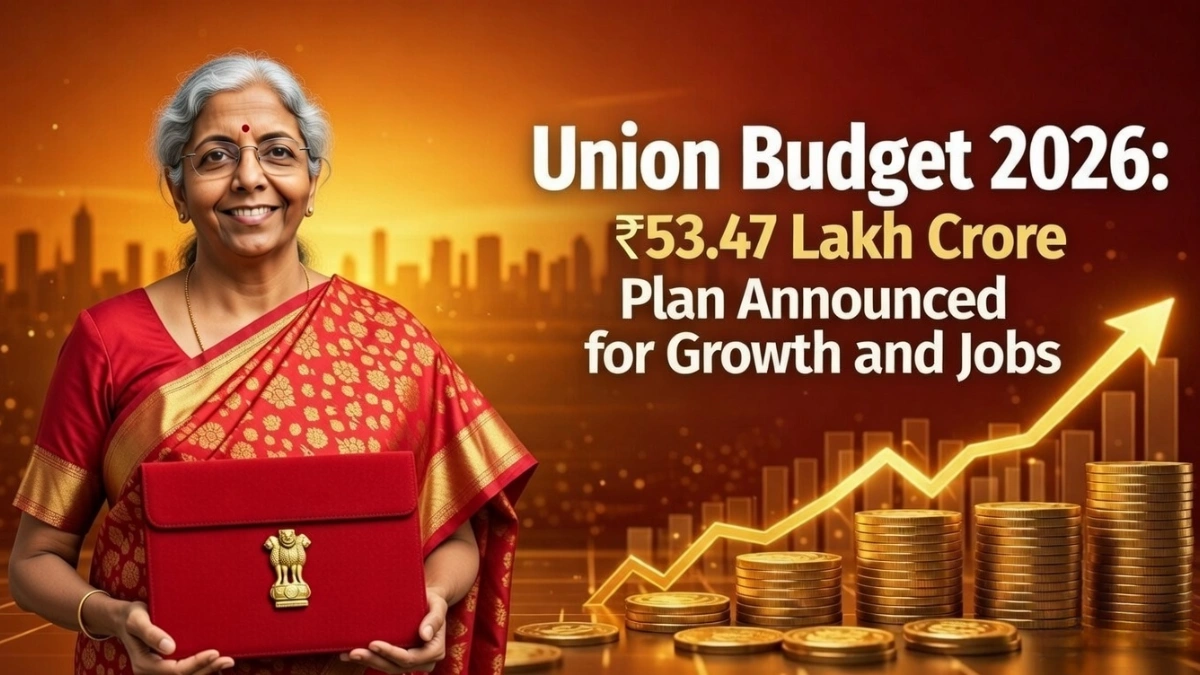
The Union Budget 2026 has drawn nationwide attention with the government announcing an ambitious spending plan of around ₹53.47 lakh crore aimed at accelerating economic growth, creating employment opportunities, and advancing the vision of a Viksit Bharat. As one of the most important financial policy announcements each year, the Union Budget outlines how the government plans to allocate resources across sectors such as infrastructure, agriculture, education, healthcare, and social welfare.
This year’s budget focuses on strengthening economic resilience, boosting infrastructure investment, supporting startups and industries, and improving the financial well-being of citizens. The large allocation reflects the government’s continued emphasis on development-driven spending and long-term economic stability.
What the Union Budget 2026 Focuses On
The central theme of the Union Budget 2026 revolves around accelerating economic growth while ensuring inclusive development. The government has emphasized policies that support job creation, infrastructure development, digital transformation, and sustainable economic progress.
One of the major priorities in the budget is the expansion of infrastructure projects across transportation, energy, and urban development sectors. Investments in highways, railways, and logistics are expected to improve connectivity and boost industrial growth.
Total Budget Allocation and Spending Plan
The government has proposed a total expenditure of approximately ₹53.47 lakh crore for the financial year. This spending plan includes allocations for key sectors that are considered critical for economic growth and national development.
| Budget Component | Allocation Focus |
|---|---|
| Infrastructure | Roads, railways and logistics expansion |
| Agriculture | Farmer support and rural development |
| Education | Skill development and digital learning |
| Healthcare | Medical infrastructure and public health |
| Industry | Support for startups and manufacturing |
These allocations reflect the government’s strategy to balance economic expansion with social development programs.
Focus on Job Creation and Employment
Employment generation remains a central objective of the Union Budget 2026. The government has emphasized policies that encourage entrepreneurship, promote manufacturing, and support small and medium enterprises. Programs aimed at skill development and vocational training are expected to help young workers prepare for emerging industries such as technology, renewable energy, and advanced manufacturing.
By strengthening these sectors, the government aims to create sustainable employment opportunities for millions of citizens.
Boost for Infrastructure Development
Infrastructure continues to receive one of the largest shares of the budget allocation. Investments in transportation networks, logistics corridors, and urban infrastructure are intended to improve efficiency and reduce the cost of doing business. Large infrastructure projects also contribute significantly to job creation because they require skilled and unskilled labor across various industries.
Improved infrastructure can also attract domestic and international investments, which further supports economic growth.
Support for Agriculture and Rural Economy
Agriculture remains a vital sector in India’s economy, and the Union Budget 2026 includes several measures aimed at strengthening rural development. Government initiatives focus on improving irrigation systems, expanding agricultural technology adoption, and supporting farmers through credit and subsidy programs.
Strengthening rural infrastructure and supply chains can help farmers increase productivity and improve income stability.
Emphasis on Digital Economy and Innovation
The government continues to emphasize digital transformation as a key driver of economic progress. Investments in digital infrastructure, data systems, and technology innovation are expected to support the growth of India’s digital economy.
Startups and technology companies may benefit from policies designed to encourage research, innovation, and entrepreneurship. These initiatives aim to position India as a leader in emerging technology sectors.
Key Benefits for Citizens
The Union Budget 2026 also includes several initiatives designed to improve the financial well-being of citizens and support social development.
• Expansion of infrastructure projects creating new employment opportunities
• Increased focus on skill development and education programs
• Strengthened healthcare infrastructure and public health initiatives
• Support for agriculture and rural economic growth
These measures aim to ensure that economic growth benefits a wide range of citizens.
Vision of Viksit Bharat
The concept of Viksit Bharat represents the government’s long-term vision of transforming India into a developed nation. The Union Budget 2026 supports this vision by focusing on sustainable growth, technological advancement, and inclusive development.
By investing heavily in infrastructure, innovation, and human capital, the government aims to create a stronger economic foundation that supports long-term prosperity. This strategic approach is intended to help India remain competitive in the global economy while improving the quality of life for its citizens.
Conclusion
The Union Budget 2026 introduces a comprehensive spending plan of around ₹53.47 lakh crore aimed at driving economic growth, creating jobs, and supporting the vision of Viksit Bharat. With strong emphasis on infrastructure development, digital innovation, agriculture support, and employment generation, the budget outlines the government’s roadmap for national development.
While the success of these initiatives will depend on effective implementation, the budget reflects a broad strategy focused on long-term growth and economic resilience. As the policies unfold, businesses, investors, and citizens will closely watch how these allocations translate into real economic progress.
Disclaimer: This article is for informational purposes only. Budget allocations and policy details may evolve based on official government announcements.