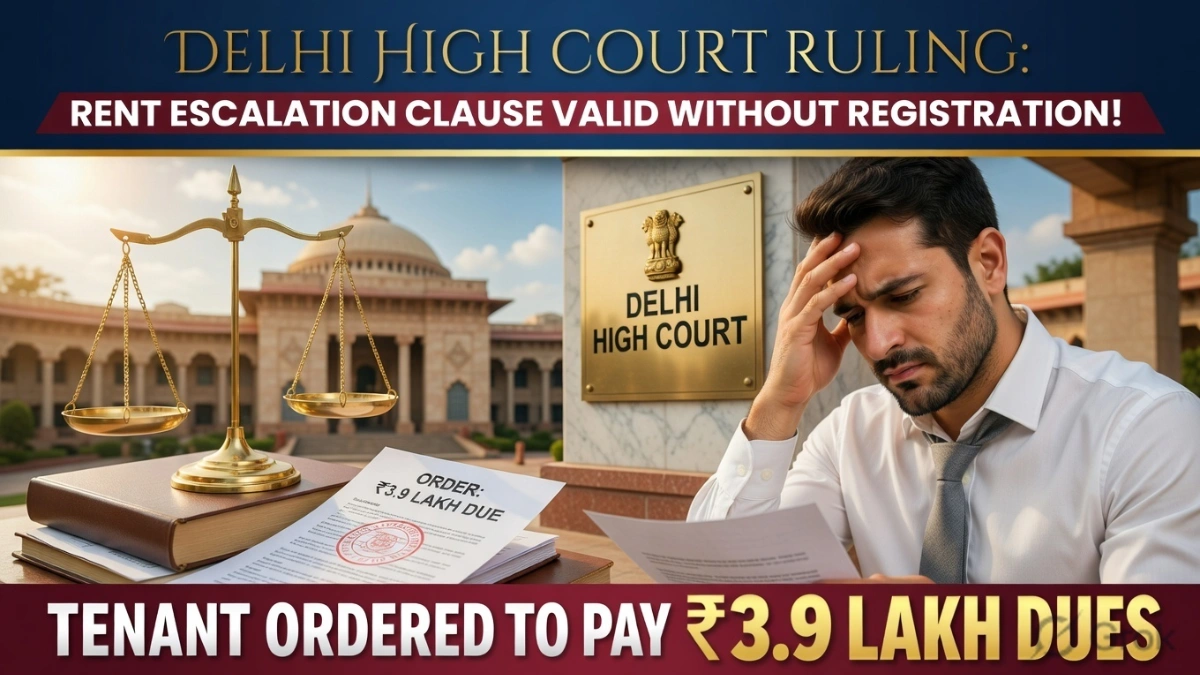
A recent ruling by the Delhi High Court has clarified that a rent increase clause in a tenancy agreement can remain valid even if the agreement was not formally registered, leading to a tenant being directed to pay ₹3.9 lakh in outstanding dues.
Overview of the Court Decision
The judgment from the Delhi High Court addressed a dispute between a landlord and tenant regarding unpaid rent and the applicability of a rent escalation clause in an unregistered lease agreement.
The court observed that even if a lease agreement is not registered, certain terms such as agreed rent amounts and escalation clauses may still be considered valid evidence when supported by consistent conduct between the parties.
Details of the Case and Payment Order
The dispute arose when the landlord claimed that the tenant had failed to pay rent according to the agreed periodic rent increase clause mentioned in the tenancy arrangement.
| Case Element | Details |
|---|---|
| Court | Delhi High Court |
| Dispute Type | Rent escalation and unpaid rent |
| Amount Ordered | ₹3.9 lakh |
| Key Issue | Validity of rent hike clause without registration |
After reviewing the facts, the court directed the tenant to clear rent arrears amounting to ₹3.9 lakh, confirming that the contractual understanding between both parties could not be ignored.
Legal Interpretation of Unregistered Lease Agreements
Under property law principles, lease agreements exceeding 11 months generally require registration. However, courts may still examine unregistered documents to determine the nature of possession, rent terms, and other contractual obligations.
The judgment clarified that while an unregistered lease may have limitations as formal evidence, it can still support claims regarding rent payment or rent escalation when other supporting factors exist.
Implications for Landlords and Tenants
The ruling highlights the importance of clear rental agreements and timely rent payments. For landlords, it reinforces that agreed contractual clauses can sometimes be enforced even without formal registration.
For tenants, the decision serves as a reminder that informal agreements or unsigned changes may still carry legal obligations, especially if both parties have acted according to those terms over time.
Legal Precautions in Rental Agreements
Both landlords and tenants are encouraged to ensure proper documentation, registration of long-term leases, and clear rent escalation clauses. Proper legal documentation can reduce disputes and provide stronger legal protection in case of disagreements.
Maintaining written records of rent payments, communication, and agreement terms also helps avoid misunderstandings and future litigation.
Conclusion
The ruling by the Delhi High Court emphasizes that contractual obligations in tenancy arrangements cannot be ignored simply because an agreement lacks formal registration. By ordering the tenant to pay ₹3.9 lakh in dues, the court reinforced the principle that mutually accepted terms in rental agreements may still hold legal weight.
Disclaimer: This article is for informational purposes only and does not constitute legal advice. Court rulings may depend on specific facts and applicable laws. Individuals involved in rental disputes should consult qualified legal professionals for guidance.