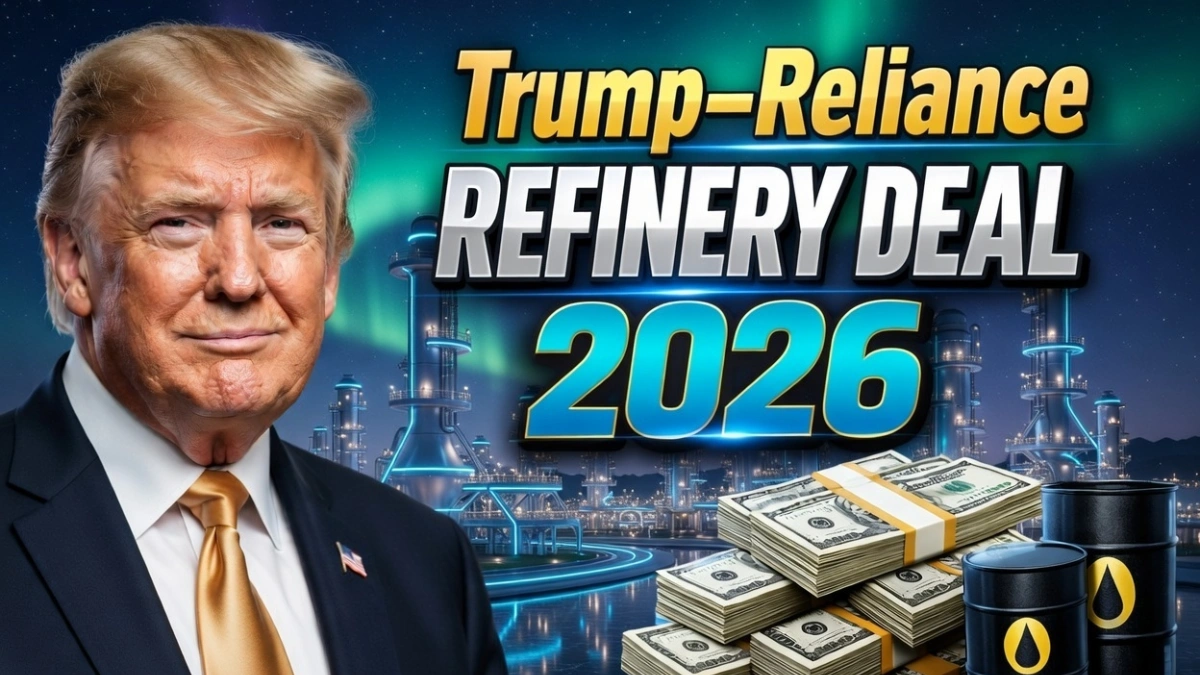
In 2026, discussions surrounding a potential partnership between former U.S. President Donald Trump and Reliance Industries have drawn global attention. The reported plan involves a large-scale investment aimed at building a new oil refinery in the United States, something the country has not seen on a major scale for nearly five decades.
Energy analysts suggest that such a project could significantly influence the American refining sector, strengthening domestic fuel production and expanding energy infrastructure.
Why a New U.S. Oil Refinery Is Significant
The United States has not built a large traditional refinery from the ground up since the late 1970s. Over the past decades, most refiners have instead expanded existing facilities rather than constructing entirely new plants.
| Key Factor | Potential Impact |
|---|---|
| Investment Size | Multi-billion-dollar infrastructure project |
| Industry Impact | Increased refining capacity |
| Energy Security | Greater domestic fuel production |
| Job Creation | Thousands of construction and operational jobs |
| Economic Influence | Boost to regional manufacturing and energy sectors |
A new refinery would represent one of the largest energy infrastructure projects in recent U.S. history.
Role of Reliance Industries in the Project
Reliance Industries is one of the world’s largest energy and petrochemical companies and operates one of the biggest refining complexes globally. The company has extensive experience in large-scale refinery construction and advanced petrochemical processing.
If the project moves forward, Reliance would likely contribute technological expertise, refining capacity planning, and large-scale operational experience.
Economic and Energy Implications
A refinery project of this scale could reshape parts of the U.S. energy market. Increased refining capacity may help stabilize fuel supply chains and reduce pressure during periods of high demand or supply disruptions.
Economically, the project could stimulate job creation in engineering, construction, logistics, and long-term refinery operations. Large infrastructure developments often generate additional investment in nearby industries such as transportation and chemical manufacturing.
Challenges and Regulatory Considerations
Building a new oil refinery in the United States involves complex regulatory approvals and environmental reviews. Federal, state, and local agencies must evaluate environmental impacts, emissions standards, and community considerations.
These regulatory steps can take years to complete, which means any refinery project would likely require long-term planning before construction begins.
Conclusion
The proposed partnership between Donald Trump and Reliance Industries represents a potentially historic development in the American energy sector. If realized, the project could become the first major U.S. refinery built in roughly half a century, expanding refining capacity and influencing the future of domestic fuel production.
Disclaimer: This article is for informational purposes only. Details about proposed investments, partnerships, and infrastructure projects may change as negotiations, regulatory approvals, and planning processes evolve. Readers should consult official announcements and reliable industry sources for confirmed developments.