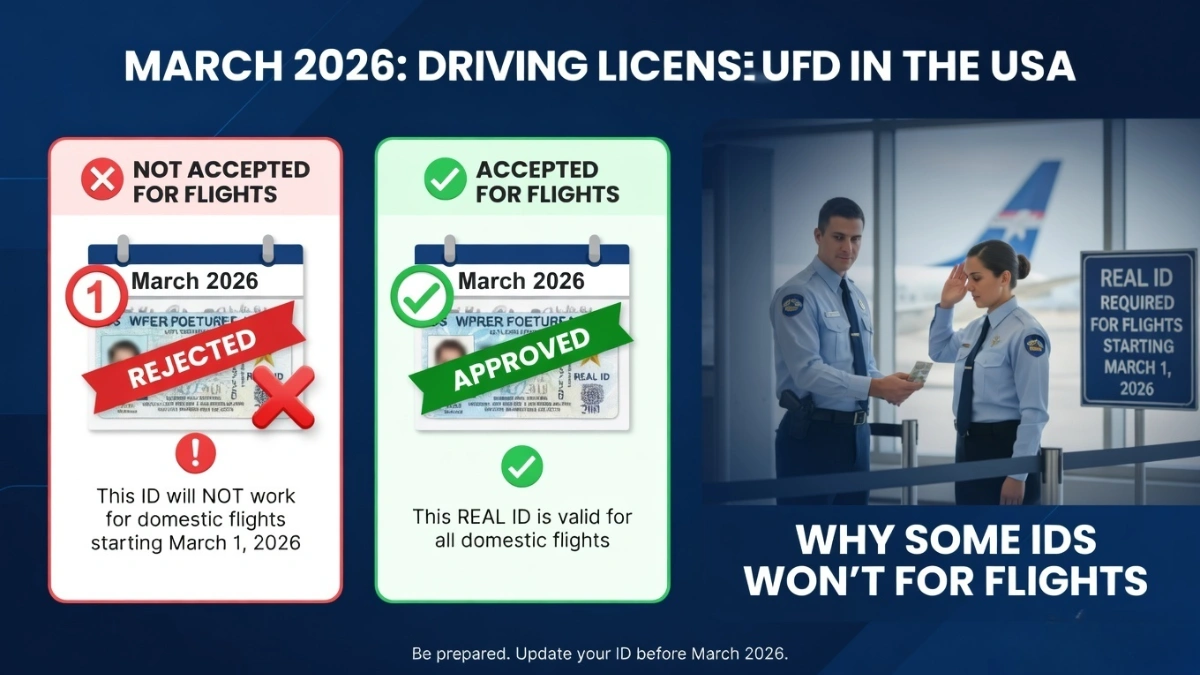
In recent years, the United States introduced stricter identification rules for travelers flying within the country. These rules come from the REAL ID Act, a federal law designed to improve security standards for identification documents.
As of 2026, travelers aged 18 or older must present a REAL ID-compliant driver’s license or another approved form of identification when passing through airport security checkpoints. Standard state driver’s licenses that do not meet federal security standards may no longer be accepted for domestic flights.
This change has created confusion among many travelers who may not realize their current license is not compliant.
What Is a REAL ID and Why It Matters
A REAL ID is a special type of driver’s license or identification card issued by state authorities that meets federal security standards established after the September 11 attacks.
REAL ID cards are usually marked with a star symbol on the front of the license, indicating that the document meets federal verification requirements. Travelers without this updated identification may face additional screening or travel restrictions when boarding flights.
The purpose of the program is to ensure that identification used at airports and federal facilities meets consistent national security standards.
IDs That May No Longer Be Accepted for Flights
| Type of ID | Status for Domestic Flights |
|---|---|
| Standard Driver’s License (Non-REAL ID) | May not be accepted |
| Temporary Paper License | Not accepted for airport security |
| Expired Identification | Not accepted |
| REAL ID Driver’s License | Accepted |
| Valid Passport | Accepted |
| Military or Federal ID | Accepted |
Travelers should carefully check their identification to confirm whether it meets the REAL ID requirements before heading to the airport.
New Verification Option for Travelers Without REAL ID
Beginning in February 2026, a new system allows some travelers without a REAL ID to verify their identity through a special process known as ConfirmID.
Under this system, passengers without an acceptable ID may pay a $45 fee to undergo additional identity verification at airport security. The verification process may involve answering security questions and undergoing extra screening.
The verification approval typically remains valid for about 10 days of travel, but it may also cause delays during airport screening.
Why the Government Introduced the New Rule
The REAL ID law was originally passed in 2005 to strengthen identification standards across the United States. The goal was to reduce identity fraud and improve national security by requiring stricter verification when issuing driver’s licenses.
Over time, enforcement deadlines were delayed several times to allow states and residents enough time to upgrade their identification documents.
Now that the rule is fully enforced, airport security agencies are encouraging travelers to upgrade their identification before traveling.
How Travelers Can Prepare for Flights
Travelers planning domestic flights should check their driver’s license for the REAL ID star symbol. If the license does not have this symbol, individuals may need to visit their state motor vehicle department to apply for an updated ID.
Alternative identification such as a valid passport, passport card, or military identification may also be used when passing through airport security.
Planning ahead and ensuring proper identification can help travelers avoid delays, additional screening, or unexpected fees at the airport.
Conclusion
The 2026 U.S. driving license update is an important change for anyone planning to travel by air. Many standard driver’s licenses are no longer accepted at airport security unless they meet federal REAL ID requirements.
By upgrading to a REAL ID or carrying another approved form of identification, travelers can ensure a smoother airport experience and avoid potential delays or additional verification procedures.
Disclaimer: This article is for informational purposes only. Identification requirements for domestic flights may change depending on government policies and security regulations. Travelers should verify current identification rules through official transportation and security authorities before flying.